

The commemoration of Indonesia’s Independence Day is a momentous occasion that unites the nation in a spirit of patriotism, reflection, and hope. Each year, as the country approaches August 17th, preparations begin to honor the historic proclamation of independence in 1945. For the 81st Anniversary of the Republic of Indonesia, a groundbreaking new approach has been adopted, setting a precedent for public involvement in national celebrations. This year, the selection of the official logo has been opened to the people, marking a significant step towards a more democratic and inclusive commemoration . This article delves deep into the significance of the 2026 Independence Day logo, its design philosophy, the unprecedented public voting process, and the vibrant narrative behind the winning entry. It is a story of creativity, unity, and a nation’s collective vision for a “Sovereign, Just, and Prosperous Indonesia” .
The Theme: A Vision for the Nation’s Future
The official theme for the 81st Anniversary of Indonesia’s Independence is “Indonesia Berdaulat, Adil, dan Makmur,” which translates to “A Sovereign, Just, and Prosperous Indonesia” . This theme is not merely a slogan but a profound reflection of the nation’s aspirations. It was established by the government to serve as the philosophical foundation for all elements of the celebration, including the visual identity of the logo . The theme encapsulates three core pillars of the nation’s Pancasila ideology and its developmental goals:
-
Sovereign (Berdaulat): This concept emphasizes the nation’s independence and authority in political, economic, and cultural matters. It signifies Indonesia’s ability to stand on its own feet, make its own decisions, and protect its national interests without foreign interference. It is a call for self-determination and resilience on the global stage.
-
Just (Adil): The pursuit of justice is a cornerstone of Indonesian society. This aspect of the theme refers to social justice for all citizens, ensuring equal rights, opportunities, and access to resources. It reflects the commitment to eradicating inequality and creating a society where every individual is treated fairly under the law and in daily life.
-
Prosperous (Makmur): The ultimate goal of the nation’s development is the prosperity of its people. This means not only economic growth but also overall well-being, including access to education, healthcare, and a high quality of life. It represents the dream of a nation where all citizens can enjoy the fruits of independence and development .
This powerful theme was the guiding principle for the logo design competition, ensuring that every submission was not just an artistic endeavor but a visual representation of Indonesia’s shared goals.
A Historic First: Public Participation Through Voting
Traditionally, the selection of the official Independence Day logo was a decision made by a select committee or the President. However, for the 81st anniversary, President Prabowo Subianto issued a direct instruction to involve the public in this significant decision . This directive marked a historic shift towards a more participatory and collaborative national celebration. The government’s decision to democratize the logo selection process was rooted in the belief that the Independence Day celebration belongs to all Indonesian people . By allowing the public to choose the visual symbol of the anniversary, the government aimed to foster a greater sense of ownership, pride, and unity among citizens .
The Polling Mechanism and Public Response
To facilitate this public participation, the government launched a dedicated website, logohutri.istanapresiden.go.id, which served as the platform for the national vote . The polling period was open from June 24 to June 28, 2026, giving the public a five-day window to select their favorite design from a curated list of five finalists . The response from the public was overwhelming and demonstrated the enthusiasm for this new approach. A total of 68,569 votes were cast by citizens across Indonesia, including the Indonesian diaspora overseas . This massive participation was a testament to the public’s desire to be involved in shaping the nation’s identity. This was the first time in Indonesian history that the public directly chose the official logo for the independence anniversary, signaling a new tradition of inclusivity and collaboration .
Incentives for Participation
To encourage active participation and reward those who took part in the democratic process, the government prepared attractive prizes for 300 lucky voters . These incentives were a gesture of appreciation for the public’s contribution to the national celebration. The prizes included:
-
100 Invitations: Lucky voters had the chance to receive a prestigious invitation to attend the Proclamation Day Ceremony on August 17, 2026, at the Merdeka Palace in Jakarta. This is a highly coveted opportunity to witness the national commemoration in person.
-
100 Souvenir Packages: Winners were also entitled to receive special souvenir packages from the 81st Independence Day committee, which are typically given to official guests of the ceremony.
-
100 Educational Grants: In a move that aligned with the theme of prosperity and development, 100 winners would receive educational assistance funds, supporting the nation’s goal of improving access to education .
These prizes added an exciting element to the voting process and reinforced the government’s appreciation for public involvement.
The Selection Process: From 124 Submissions to Five Finalists
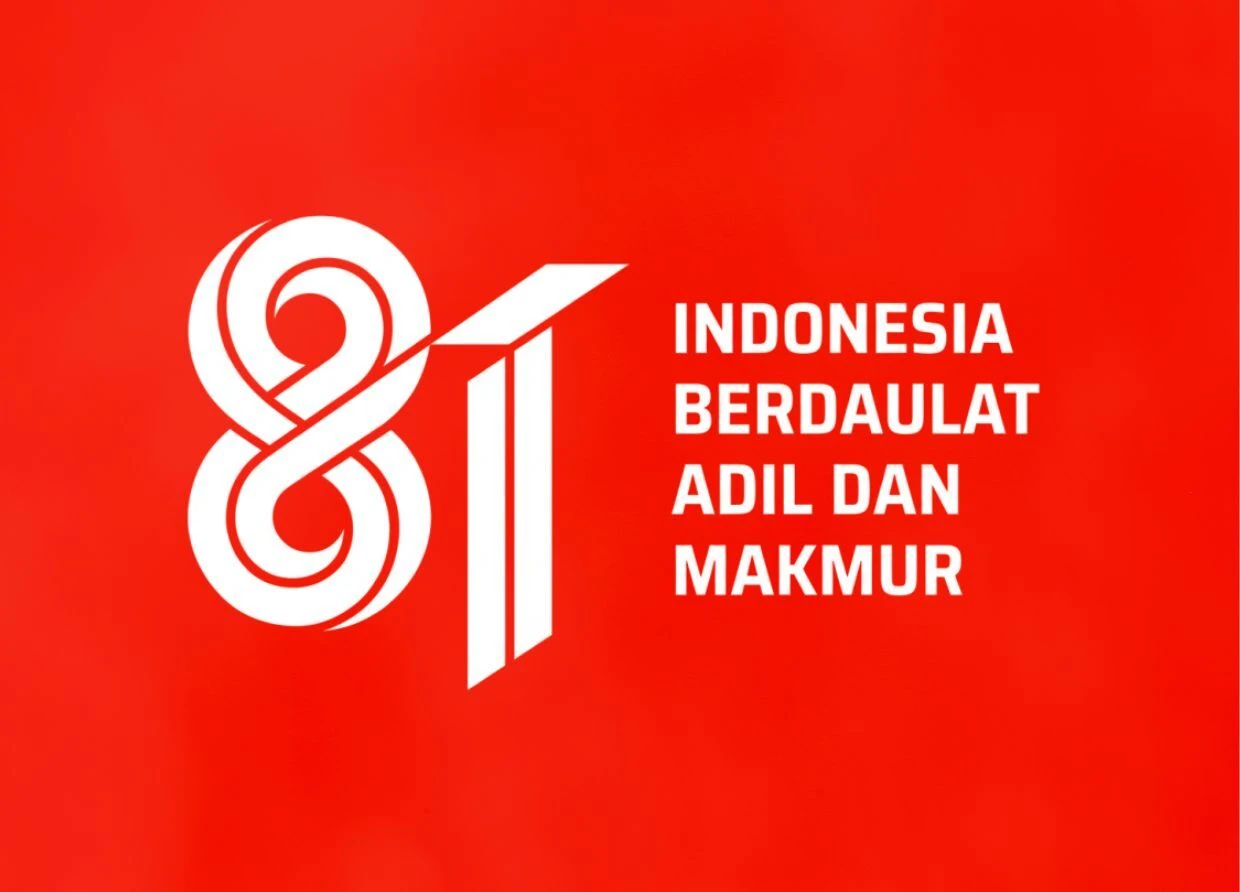
Before the public could cast their votes, a rigorous and professional selection process was undertaken to choose the five best logo designs. The government received a remarkable 124 submissions from graphic designers and creative professionals all over Indonesia . This high number of entries reflected the immense creativity and talent present in the country’s design community. The selection process was a collaborative effort involving key government bodies and professional associations. The main entities involved were:
-
Ministry of State Secretariat (Kemensetneg)
-
Ministry of Creative Economy (Kemenekraf)
-
The Indonesian Graphic Design Association (ADGI) .
A team of experts from these institutions conducted a thorough curation and evaluation of all the entries. The experts assessed the designs based on several criteria, including their artistic merit, originality, and, most importantly, how effectively they interpreted the official theme “Indonesia Berdaulat, Adil, dan Makmur” . The process involved multiple stages, starting with an open call for submissions, followed by a closed pitching session where shortlisted designers presented their concepts to government representatives . After a grueling evaluation process, five outstanding finalists were selected, each representing a different region and bringing a unique visual interpretation of the national theme. The finalists, their designs, and their philosophical concepts were unveiled to the public for the voting period .
The Five Finalist Logos and Their Philosophies
Each of the five finalist logos was a masterpiece of design, deeply rooted in Indonesian culture and national aspirations. Understanding the philosophies behind each design provides insight into the values that the nation holds dear. Here is a detailed look at the five candidates that were presented for public voting :
A. David Wirawan (Surakarta, Central Java): “8 Harapan, 1 Tujuan”
This design, conceptualized by David Wirawan, was built on the idea of “8 Hopes, 1 Goal”. The number 8 in the logo serves as the primary visual structure, carrying eight core philosophical elements. The number 1 represents the single, unified vision for Indonesia.
Key Philosophical Elements:
-
Tangguh (Resilient): The solid body of the number 8 symbolizes a strong and resilient government.
-
Ekosistem (Ecosystem): The closed frame of the number 8 represents a protected national ecosystem.
-
Progres (Progressive): The shape of the number resembles steps, symbolizing steady progress and growth.
-
Kolaborasi (Collaborative): The upper and lower wings of the design represent the symbiotic relationship between the government and the people.
-
Kesatuan (Unity): The head of the Garuda (the national emblem) is integrated into the number 1, symbolizing unity.
-
Patriotisme (Patriotism): The spirit of struggle is embodied by the bamboo spear (bambu runcing), a symbol of the nation’s fight for independence.
-
Kemajuan (Advancement): The overall shape points diagonally upward, symbolizing progress and forward movement.
-
Vitalitas (Vitality): Dynamic curves in the design represent the nation’s energy and vitality.
This design from Studio Visual Nusantara sought to capture the essence of a solid, progressive Indonesia moving forward with a single, unified purpose .
B. Fajar Novario (Padang, West Sumatra): “Kolektif, Sinergi, Bertumbuh”
The winning design, created by Fajar Novario, a graduate of Padang State University and co-founder of Auman Design Bureau , was built upon the concept of “Collective, Synergy, and Growth”. Fajar’s design philosophy was deeply rooted in the principle of people’s sovereignty (kedaulatan rakyat). He believed that the people are the main pillar in realizing the vision of a sovereign, just, and prosperous Indonesia . The design stemmed from an exploration of various traditional motifs from across the Indonesian archipelago . Despite the diversity of these patterns, Novario discovered common visual threads that existed in many regions, which he then elevated as a symbol of national unity . The logo’s composition visually represents the collective energy of a diverse nation, with its myriad cultures, languages, and backgrounds, coming together in synergy to achieve growth. This concept, created by the Karsa Visual Merdeka team, resonated strongly with the public .
C. Kanda Putra (Denpasar, Bali): “Kemanusiaan yang Terhubung”
Kanda Putra’s design, titled “Connected Humanity,” was inspired by the value of humanity as stated in the second principle of Pancasila. The structure of the number 8 in the logo is designed to represent Indonesia as a network of equal, connected, and mutually strengthening human relationships . The concept was also derived from the “Asta Cita” vision, and it abstracts several aspects of Indonesian connectivity:
-
Kebangsaan (Nationalism): As the foundation of unity.
-
Wawasan (Insight): As a perspective for the future.
-
Masyarakat (Society): As the center of development.
-
Ruang Hidup (Living Space): Representing mutual care.
-
Kebersamaan (Togetherness): Showing social relations moving together.
-
Budaya (Culture): As the color of the nation’s identity.
The design by Kolektif Kreatif Bangsa emphasizes that Indonesia is shaped by its diversity, proclaiming, “Identitas yang Berbeda, Tetapi Tetap Satu!” (Different Identities, but Still One!) .
D. Rizkiawan (Malang, East Java): “Berdaya, Setara, Sinergi Bersama”
Rizkiawan’s design, named “Empowered, Equal, Synergy Together,” constructs the number 81 from three main lines, each representing a core aspiration for Indonesia. This concept, by Citra Desain Indonesia, was inspired by the idea of collective strength and resilience .
Key Principles:
-
Berdaya (Empowered): This is represented by a flexible yet strong curve inspired by the natural character of rattan (rotan), a material traditionally used in Indonesian craftsmanship. It symbolizes the nation’s ability to face change.
-
Setara (Equal): A straight line symbolizes the nation’s direction and equality of rights for all Indonesian citizens, reflecting the principle of justice.
-
Sinergi Bersama (Synergy Together): This is reflected in the weaving principle that connects every element into a single force, representing the spirit of mutual cooperation (gotong royong) and collaboration.
The design represents a resilient, united Indonesia that is constantly moving forward .
E. Tiffany Djohan (Batam, Riau Islands): “Demokrasi & Kemandirian”
Tiffany Djohan’s concept, “Democracy & Independence,” carries a modern interpretation of the nation’s ideals. Designed by Sanggar Seni Garuda, the logo uses several visual elements to tell a story about Indonesia’s journey and aspirations .
Visual Interpretations:
-
Jembatan Keberlanjutan (Bridge of Sustainability): The shape connects the two numbers, representing the continuity of the nation’s development from one era to the next.
-
Balon Percakapan (Speech Bubble): The silhouette of a speech bubble symbolizes openness, transparency, and freedom of expression in a democracy.
-
Padi dan Kapas (Rice and Cotton): Adapted from the fifth principle of Pancasila, these symbols represent social justice.
-
Pilar Kemandirian (Pillar of Independence): The solid structure of the number 1 represents the strength of the nation in standing on its own feet.
-
Bendera Pergerakan (Movement Flag): The negative space creates the silhouette of a fluttering flag, symbolizing the dynamic momentum toward a Sovereign, Just, and Prosperous Indonesia .
Each of these five finalists demonstrated an exceptional ability to translate complex national ideals into compelling visual narratives. The diversity of their approaches highlighted the rich tapestry of Indonesian creativity.
The Winning Logo: By Fajar Novario
After the public voting concluded on June 28, 2026, the results were officially announced at a press conference at the Presidential Palace Complex on June 29, 2026 . The design by Fajar Novario from Padang, West Sumatra, was declared the winner, having secured an impressive 44.73 percent of the total votes. His design received 30,699 out of 68,569 votes . The announcement was made by Deputy Minister of State Secretariat Juri Ardiantoro, who was joined by Minister of Creative Economy Teuku Riefky Harsya and other officials .
Design Philosophy: “Collective, Synergy, and Growth”
The winning logo’s philosophy is a powerful reflection of Indonesia’s spirit. The concept, “Kolektif, Sinergi, Bertumbuh” (Collective, Synergy, and Growth), embodies the idea that the nation’s strength lies in its unity and collaborative spirit . The design is a visual representation of this philosophy. Fajar Novario explained that he was inspired by an exploration of traditional motifs from various regions in Indonesia . Indonesia is home to thousands of distinct ethnic groups and cultures, each with its own unique art and design patterns. Novario discovered common visual patterns among these diverse motifs, illustrating that despite their differences, they share a fundamental unity. By bringing these shared patterns together into a single logo, he created a powerful symbol of how diversity is a foundational strength for the nation . The logo conveys a message that the Indonesian people, with all their differences, are united in their goals for a sovereign, just, and prosperous nation. It is a testament to the idea that the people’s sovereignty is the foundation of the nation’s greatness.
The Creators: A Celebration of Local Talent
The victory of Fajar Novario is also a victory for regional creative talent. Born and raised in Padang, West Sumatra, Novario is a 2023 graduate of Padang State University (UNP) in visual communication design . He is the co-founder of Auman Design Bureau and a driving force behind the Padang Desain Area community, a group dedicated to fostering the graphic design industry in his region . His success proves that designers from outside the capital can compete and excel on the national stage, embodying the theme of the Ministry of Creative Economy’s vision of “local heroes becoming national champions” . He outpolled four other exceptionally talented finalists: David Wirawan (Surakarta), Kanda Putra (Denpasar), Rizkiawan (Malang), and Tiffany Djohan (Batam) . As a prize for his winning design, the Ministry of Creative Economy awarded Fajar Novario a cash prize of Rp100 million .
How the Public Can Use the Logo
Following the official launch, the government has made it easy for the public and various stakeholders to adopt and use the official logo and visual identity. The logo is not just for government use; it is intended to be a unifying symbol that can be used by all elements of society to celebrate the anniversary . The official website, logohutri.istanapresiden.go.id, serves as a central hub for downloading the logo in various formats and resolutions . The site also provides a comprehensive usage guide that includes examples of how the logo can be implemented across different media . This includes:
-
Banners and Billboards: Guidelines for large-format printing for public displays.
-
Merchandise: Instructions for using the logo on official merchandise like t-shirts, pins, and bags.
-
Social Media: Tips and formats for using the logo as profile pictures, covers, and in posts on various social media platforms .
The government has also urged the public to actively participate in the celebrations by flying the Red and White flag at their homes, schools, and offices. This call to action is part of a broader effort to ensure that the 81st Independence Day is not just a government-led event but a vibrant, nationwide celebration that truly belongs to the people .
Conclusion
The selection of the logo for Indonesia’s 81st Independence Day in 2026 represents a significant milestone in the nation’s journey. It was a celebration of Indonesian creativity, a testament to the nation’s democratic values, and a powerful expression of national unity. By entrusting the selection of the national symbol to the people, the government of President Prabowo Subianto successfully fostered a deep sense of ownership and engagement among citizens. The winning design by Fajar Novario, with its emphasis on collective strength, synergy, and growth, perfectly encapsulates the theme “A Sovereign, Just, and Prosperous Indonesia.” It is a proud, dynamic, and contemporary symbol that bridges Indonesia’s rich cultural heritage with its ambitious vision for the future. As the nation prepares to celebrate its 81st year of independence, this logo will serve as a constant reminder of the power of unity and the shared dream of a brighter tomorrow.