

Milan once again proved its position as the undisputed world capital of design when the city hosted the 64th edition of the Salone del Mobile.Milano from April 21 to 26, 2026. The annual event, which anchors the broader Milan Design Week, drew an impressive 316,342 visitors from 167 countries, showcasing the work of over 1,900 brands from 32 nations. More than just a trade fair, this gathering has become a powerful economic and cultural force that sets the agenda for how people will live in the years ahead.
The significance of this year’s event was underscored when Italy’s Deputy Prime Minister and Minister of Foreign Affairs, Antonio Tajani, formally conferred upon the Salone the title of “Ambassador of Italian Design Worldwide”. This designation officially integrated the fair into the nation’s economic and cultural diplomacy framework, elevating it from an industry showcase to a strategic asset for the country. It signaled that the design world, with Milan at its center, plays a pivotal role in shaping global conversations about lifestyle, innovation, and the future of domestic spaces.
This year’s edition carried the theme “A Matter of Salone,” a phrase that deliberately plays on the dual meaning of “matter” as both physical substance and significance. The message was clear: design is not just about creating beautiful objects, but about harnessing materials, innovation, and human needs to build meaning and value. As Salone President Maria Porro articulated, the event’s role is to “set the world of design in motion,” transforming attendance into relationships and complexity into direction. This philosophy framed the entire event, from its major exhibitions to its sprawling city-wide programs, making it clear that the future of home design is a serious and consequential “matter.”
The Rise of the Sanctuary: Kitchen and Bathroom Evolution
Two of the most traditionally functional spaces in the home, the kitchen and the bathroom, took center stage as primary sites of innovation. They are being radically redefined as personal sanctuaries private retreats designed for well-being, connection, and ritual. This trend underscores a global shift in how we perceive our homes, moving from purely functional shelters to holistic environments that nurture our mental and physical health.
The Soft Kitchen: Heart of the Home
The kitchen’s evolution into the central hub of family life was powerfully illustrated at the biennial EuroCucina exhibition, which occupied over 23,000 square meters and featured 106 exhibitors. A major theme was the emergence of the “soft kitchen,” a concept that challenges the rigid, boxy layouts of the past in favor of organic, flowing forms.
Brands like Cesar showcased this shift with modular systems such as their Tangram kitchen, which uses five flexible curved modules to create a fluid and dynamic layout. This design allows the kitchen to integrate seamlessly with adjoining living spaces, promoting a sense of openness and continuity. Poliform went even further with their Harp kitchen island, which resembles a spacious sculptural work surface more than a traditional countertop. Crafted from light wood, soft curves, and marble tops with polished steel details, the Harp island was a testament to how the kitchen is increasingly valued as both a highly functional workspace and a significant aesthetic statement.
This integration is driven by an explosion in technology and artificial intelligence. At the dedicated FTK – Technology For the Kitchen exhibition, companies unveiled increasingly silent, integrated, and autonomous appliances. Miele, for instance, presented its “Designed to Move with You” concept, envisioning the kitchen as a reactive and connected living space that adapts to its users’ rhythms. Their new innovations included the KM 8000 induction cooktop with intelligent temperature-regulating cookware and a new AI-powered assistant, CulinaryCoach. This integrated app provides personalized cooking recommendations and can transfer settings directly to connected appliances, making the cooking process more intuitive and less stressful.
Key innovations seen included:
A. Interactive surfaces and invisible induction cooktops that maintain clean lines.
B. Smart refrigerators capable of recognizing food and organizing grocery lists in the cloud.
C. Intelligent ovens that automatically adjust cooking parameters based on the food type and user preferences.
D. Dishwashers that self-dose detergent and communicate when maintenance is required.
The Spa Aesthetic: Wellness at Home
If the kitchen is the new heart of the home, the bathroom has become its meditative soul. Mirroring the explosive growth of the global wellness industry, bathroom design at the 2026 Salone was overwhelmingly focused on transforming the space into a private spa. This trend, which has been growing for years, reached a new peak with concepts that integrate advanced hydrotherapy, aromatherapy, and chromotherapy.
The International Bathroom Exhibition showcased this new direction, with major brands unveiling products designed for “wellness and longevity”. Gessi’s prototype, “Rituale del Vapore,” offered a comprehensive steam experience that envelops the entire body. It allows users to adjust the intensity of the steam while incorporating customizable colored lighting and aromatherapy, elevating a simple shower into a therapeutic ritual.
Grohe presented an even more integrated solution with its Spa Private Collection Vanity. This elegant piece is not just a sink but a command center for self-care, featuring integrated facial steam, essential oil capsules, customizable colored lighting, and even a dedicated cooling compartment for storing cosmetics. This move towards “bringing the spa experience closer to everyday life” signifies a broader cultural shift where personal well-being is prioritized in domestic design.
The Aesthetic of Emotion: Materiality and the Senses
While technology and function are crucial, the 2026 Milan Design Week proved that the future of home design is equally defined by a profound and sensory engagement with materials. A powerful “return to materiality” was evident across the fair, where designers explored tactility, memory, and transformation, using materials to create deep emotional resonance.
The New Luxury of Craftsmanship
In an age of rapid digitalization and AI, there was a palpable yearning for the human touch. The work of the human hand was not only celebrated but positioned as a counterpoint to algorithmic design. This was powerfully demonstrated in exhibitions where the act of making became a performance.
Missoni placed a giant industrial loom at the center of its exhibition, continuously weaving fabric in front of visitors. This act laid bare the process and rhythm of textile creation, celebrating the choreography of craft that is often hidden in luxury production. Similarly, Prada Home, curated by American artist Theaster Gates, showcased a collection of exquisite handcrafted Japanese ceramics. The display was less about flaunting luxury and more about celebrating the tactile and cultural significance of the objects, and their unique ability to preserve memory and time. Luxury automotive brand Bentley Home also reflected this trend, focusing its new collection on a “sensory landscape” of tactile materials like natural wool, alpaca, cotton, and linen, intended to create interiors of understated comfort.
Materials Reclaimed and Reimagined
Sustainability, once a niche trend, has become a standard and non-negotiable principle in high-end design. The focus has shifted from marketing “green” products to embedding circular design and material reuse into the creative narrative. Designers are proving that sustainability and luxury are no longer mutually exclusive but are instead essential components of sophisticated contemporary design.
This was evident in several high-profile launches. The Traverso table by Carlo Colombo for Lema made a dramatic statement by using marble for both the tabletop and legs. However, in a nod to sustainability, the legs can also be made from Re-Glassing, a regenerated glass material derived from decommissioned solar panels. This innovative approach demonstrates how waste materials can be transformed into objects of high value and beauty.
Jean-Marie Massaud’s Aom collection for Arper explored material efficiency in depth. It uses an ultra-lightweight expanded polypropylene structure and Breathair, a recyclable polyester elastomer that replaces conventional polyurethane padding. The pared-back construction reduces the amount of material used and makes the pieces easier to assemble and, eventually, recycle. This demonstrates a holistic approach to sustainability that considers the entire lifecycle of the product.
The Palette of Emotion: Color and Wellbeing
The colors unveiled at Milan Design Week were a direct reflection of the global desire for comfort and emotional connection. Instead of vibrant, brash statements, designers favored nuanced, natural tones that create serene and grounding atmospheres.
The key color trends were:
A. Grounding Greens: Hues like olive, sage, and moss were favorites, reflecting a broader embrace of biophilic design that connects interiors with nature.
B. Whisper-Soft Blues: Powdery, smoky, and grey-based blues introduced calm sophistication, creating elegant and architectural spaces without overwhelming the senses.
C. Dusty Pinks: Soft blush and clay-inspired hues replaced sugary pastels, offering a mature and sophisticated interpretation of femininity.
A standout technique was “color drenching,” where a single color family envelops an entire space walls, ceiling, floor, and furniture creating an immersive, cocoon-like environment that feels both dramatic and deeply harmonious.
The Language of Space: Architecture and Flexibility
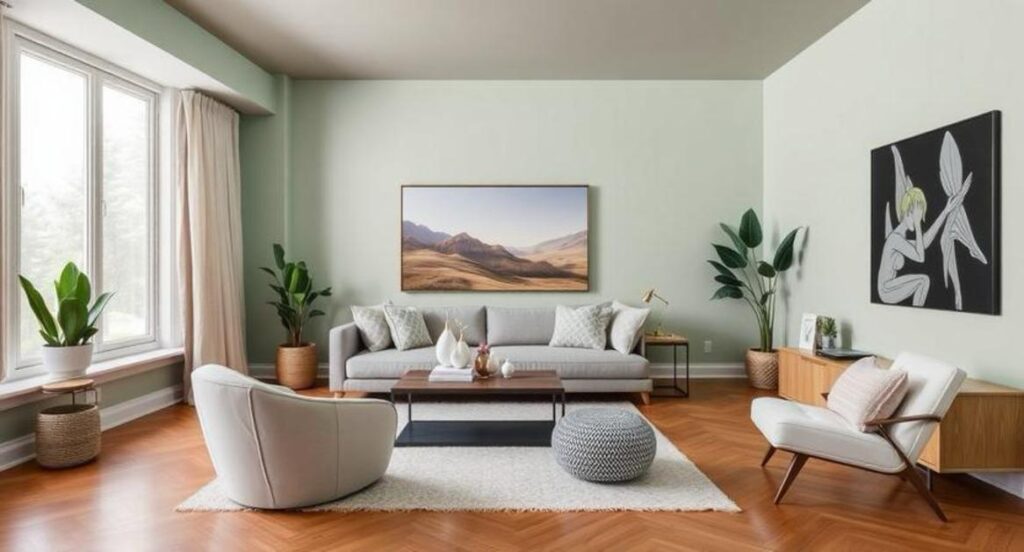
The way we live inside our homes is changing, and Milan Design Week 2026 provided a glimpse into the architectural languages and spatial concepts that will define future homes. Two major themes were the dissolution of walls and the embrace of prefabricated, modular systems.
No-Wall House: Furniture as Architecture
The concept of the “No-Wall House,” presented by Caccaro, offered a radical vision of a home without traditional partitions. In this installation, curated by Monica Graffeo, the furniture itself acts as the architecture. Instead of walls defining rooms, freestanding, self-supporting furniture systems create zones for different functions. These compositions serve as room dividers and incorporate all the storage and infrastructure of a home, from wardrobes to entertainment centers.
This approach allows for a fluid, adaptable, and open space that can evolve over time to accommodate changing lifestyles and needs. The home is conceived not as a static set of rooms, but as a “flexible infrastructure.” This vision aligns with the growing popularity of multipurpose living areas in an era where home is often also an office, gym, or classroom.
The Eames Pavilion: Democracy Through Design
In a parallel exploration of spatial flexibility, the Eames Office and Spanish manufacturer Kettal unveiled the Eames Pavilion System at the Triennale Milano. This project reimagines the iconic, mid-century modern Eames House as a flat-packed, modular building system designed to be accessible to everyone.
The system is a framework of aluminum and interchangeable infill panels (glass, timber, composite materials) that can be configured in countless ways. It can be a single pavilion or expanded into a multi-bay or even two-story structure. The pricing model reflects its mission to democratize good design, with smaller units starting around $50,000 and a cost of approximately $260 per square foot. This concept bridges the gap between high-end design and the need for affordable, high-quality, and adaptable housing, reflecting a future where “design for all” becomes a more concrete reality.
AI and the New Domestic Companions
Artificial Intelligence is not just for appliances; it is entering the home as a presence. Samsung’s AI Home, a revamped space in Milan, showcased a fully connected home where AI anticipates needs and optimizes daily routines. All devices, from refrigerators to TVs, are connected through the SmartThings ecosystem, creating a “Connected Living” experience that is fluid, intuitive, and personalized.
One of the most intriguing visions came from Samsung’s Open Lab, which presented the “AI Companion.” This small spherical robot is designed to feel less like a gadget and more like a genuine presence. It has a face that can open to reveal a projector, casting interactive content onto surfaces, and can interact with other companions, creating a shared, social experience. The design deliberately moves away from a transactional relationship with technology towards one that is more emotional and playful. This is smart design defined by human-centered thinking, creating products that adapt and improve everyday life.
Conclusion: The Home as a Canvas for Life
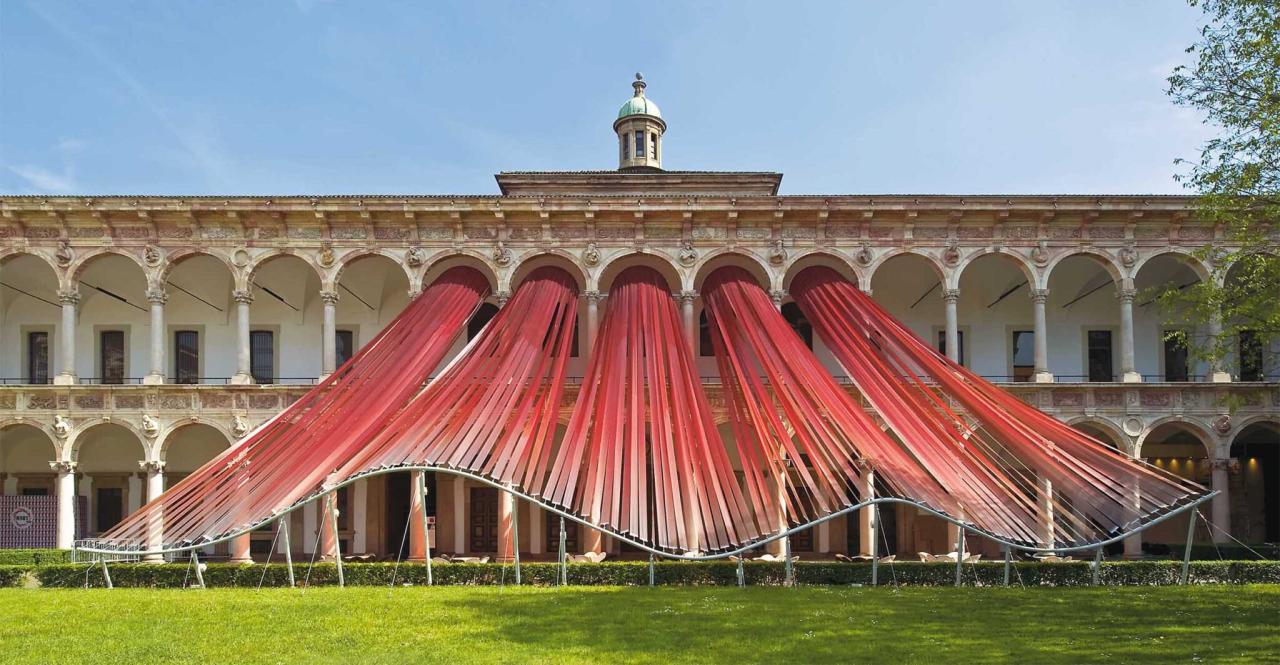
Milan Design Week 2026 painted a compelling picture of the future home. It is a place defined by a profound pursuit of well-being, a sanctuary for the mind and body expressed through the “soft kitchen” and the “spa bathroom.” It is a space of immense emotional depth, where the tactility of natural materials and the skill of the human hand are valued more than ever as a counterbalance to a digital world. It champions sustainability not as a selling point, but as a core value of good design.
Flexibility is paramount, with homes designed as adaptable infrastructures that can change with their inhabitants. Technology is not an intrusive guest but an integrated and intuitive partner, from AI-powered appliances to robotic companions that add a new layer of intelligence and companionship to daily life. The world of interior design is moving away from rigid notions of form and function to embrace materiality, emotion, sustainability, and a renewed appreciation for craftsmanship. The future of living, as envisioned in Milan, is not just about how a home looks, but how it makes us feel and how it enables us to live better, more connected lives.