
We stand at the precipice of a new era, a period defined by unprecedented technological acceleration, complex global challenges, and a fundamental shift in human expectations. In this dynamic landscape, traditional problem-solving methods are no longer sufficient. We cannot simply react to the present; we must proactively design for the future. This is the core of Future Design & Innovation a disciplined, forward-thinking approach that moves beyond incremental improvements to envision and create a radically better tomorrow. It is a multidisciplinary philosophy that integrates foresight, empathy, technology, and sustainability to build systems, products, and services that are not only functional and desirable but also responsible and resilient. This comprehensive guide delves into the principles, methodologies, and profound importance of Future Design, illustrating how it is the key to unlocking a sustainable and human-centric future.
A. Deconstructing Future Design: More Than Just a Prediction
Future Design is often mistakenly viewed as mere forecasting or trend-spotting. While these elements are involved, its essence is far more profound. It is the practice of using strategic foresight to inform present-day decision-making and design processes. It’s about building a navigational compass for the unknown, not a detailed map.
A.1. Core Philosophy: From Reactive to Proactive
Traditional design is typically reactive; it addresses existing needs and current pain points. Future Design is inherently proactive. It asks not just “What problem can we solve today?” but “What world do we want to live in tomorrow, and what must we build today to get there?” This shift in mindset is crucial for long-term survival and relevance in any industry.
A.2. The Role of Strategic Foresight
This involves systematically exploring, anticipating, and planning for possible, probable, and preferable futures. Practitioners use tools like:
-
Trend Analysis: Identifying patterns in technology, society, economics, politics, and the environment.
-
Horizon Scanning: Looking for weak signals and emerging issues that could become significant in the future.
-
Scenario Planning: Developing rich, narrative-based stories about different potential futures (e.g., a world with abundant clean energy, a world grappling with severe climate migration) to stress-test strategies and innovations.
A.3. Embracing Speculative and Critical Design
This branch of Future Design uses provocative artifacts and concepts to challenge assumptions, question the ethical implications of technology, and open public discourse. For example, a speculative design project might create a fictional service for editing memories to spark a conversation about privacy, identity, and neuro-technology, long before such a technology becomes a reality.
B. The Pillars of Modern Innovation: Building on a Stable Foundation
Innovation, in the context of Future Design, is not a random act of creativity. It is a structured process built upon several interdependent pillars that ensure its impact is both meaningful and lasting.
B.1. Human-Centered Design (HCD) with a Future Lens
At its heart, all innovation must serve humanity. HCD emphasizes deep empathy for end-users through observation and co-creation. Future Design expands this empathy across time, considering not only the needs of today’s users but also the potential needs, values, and ethical concerns of future generations. It involves designing with cultural sensitivity and for diverse, global populations.
B.2. Technological Convergence
The most groundbreaking innovations occur at the intersection of different technologies. Future Design actively seeks these synergies:
-
AI & Machine Learning: For predictive analytics, hyper-personalization, and solving complex data-intensive problems.
-
Internet of Things (IoT): Creating interconnected ecosystems of smart devices that gather and share data to optimize environments, from homes to entire cities.
-
Biotechnology & Bio-design: Using organic processes and materials to create sustainable solutions, from self-healing concrete to lab-grown meat.
-
Quantum Computing: Promising to revolutionize fields like drug discovery, cryptography, and complex system modeling.
-
Augmented & Virtual Reality (AR/VR): Redefining experiences in education, remote work, retail, and social interaction.
B.3. Sustainability and Circular Economy
This is non-negotiable. Future innovation must decouple economic activity from the consumption of finite resources. Designers and innovators are now prioritizing:
-
Circular Design: Creating products for disassembly, reuse, and recycling from the very beginning, eliminating the concept of “waste.”
-
Regenerative Design: Going beyond sustainability to create systems that restore and revitalize their own sources of energy and materials, having a net-positive impact on the environment.
-
Carbon-Neutral Solutions: Innovating in green energy, sustainable agriculture, and transportation to achieve net-zero emissions targets.
B.4. Ethical Governance and Responsible Innovation
As technology grows more powerful, so does the potential for misuse. Future Design mandates a framework of ethics. This includes:
-
Algorithmic Bias Mitigation: Ensuring AI systems are fair, transparent, and accountable.
-
Data Sovereignty and Privacy: Giving individuals control over their personal data.
-
Precautionary Principle: Carefully weighing the potential long-term societal and environmental impacts of an innovation before its widespread deployment.
C. Methodologies: The Toolkit for Future Designers
Translating the philosophy of Future Design into tangible outcomes requires a robust set of methodologies.
C.1. Design Thinking 2.0
While the classic 5-stage process (Empathize, Define, Ideate, Prototype, Test) remains valuable, Future Design extends it. It incorporates foresight activities in the “Empathize” and “Define” phases and uses advanced digital prototyping (digital twins, AR simulations) for more robust testing.
C.2. Futures Wheels
A visual mapping tool that helps teams explore the secondary, tertiary, and beyond consequences of a change or trend. The central node is the change (e.g., “Widespread adoption of autonomous vehicles”), and concentric rings map out the direct and indirect implications (e.g., reduced car ownership, changes in urban planning, loss of driving jobs, new insurance models).
C.3. Backcasting
This powerful technique starts by defining a desirable future endpoint (e.g., “A fully circular city by 2050”). Teams then work backwards to identify the necessary policies, technologies, and behavioral changes needed to achieve that vision. This ensures that present-day actions are directly aligned with long-term goals.
C.4. Prototyping for Future Scenarios
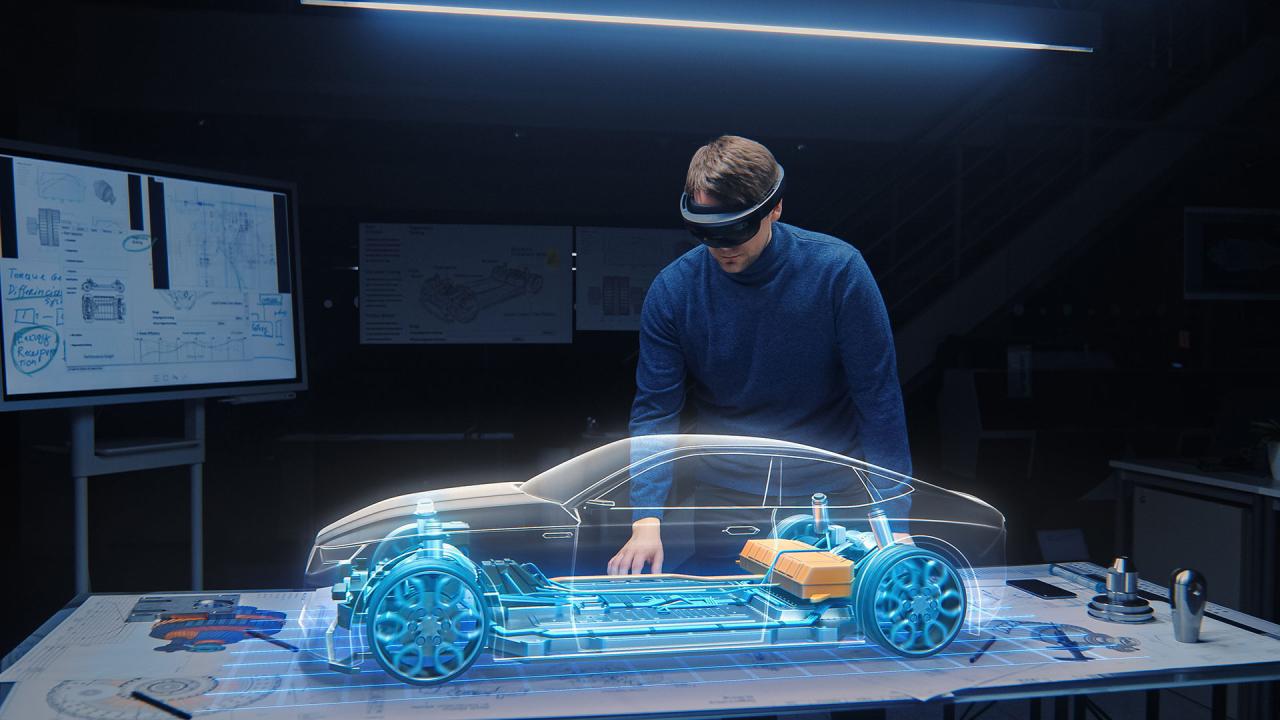
Instead of prototyping just a product, innovators create working models or immersive experiences that allow people to interact with a potential future. This could be a VR simulation of a day in a smart city or a functional prototype of a new sustainable packaging material, making the future tangible and gathering valuable feedback.
D. Real-World Applications: Future Design in Action Today
The principles of Future Design are already transforming industries and improving lives across the globe.
D.1. The Smart and Resilient City
Future Design is shaping urban landscapes into intelligent, adaptive organisms. Examples include:
-
Adaptive Energy Grids: Using IoT and AI to balance energy supply and demand dynamically, integrating renewable sources seamlessly.
-
Mobility-as-a-Service (MaaS): Platforms that integrate public transport, ride-sharing, bike rentals, and scooters into a single, on-demand service, reducing congestion and emissions.
-
Predictive Infrastructure: Sensors in bridges and buildings that predict maintenance needs before failures occur.
D.2. The Future of Healthcare: Predictive, Personalized, and Participatory
Innovation is moving healthcare from a reactive model to a proactive one.
-
Preventive Health Platforms: Wearables and AI analyze health data to predict and prevent illnesses before symptoms appear.
-
Personalized Medicine: Treatments and drugs tailored to an individual’s genetic makeup, vastly improving efficacy.
-
Telemedicine and Remote Surgery: AR and 5G enable specialist care and even complex surgical procedures to be delivered remotely, breaking down geographical barriers.
D.3. The Next Generation of Sustainable Agriculture
Feeding a growing population without destroying the planet is a quintessential Future Design challenge.
-
Precision Agriculture: Drones and sensors monitor crop health, soil conditions, and moisture levels, allowing for ultra-efficient use of water and fertilizers.
-
Vertical and Urban Farming: Using controlled-environment agriculture to grow food closer to consumers, reducing food miles and land use.
-
Alternative Proteins: Innovating with plant-based and cultured meat to provide sustainable and ethical protein sources.
D.4. The Metaverse and Spatial Computing
The convergence of AR, VR, and the internet is creating a new frontier for human interaction, work, and commerce the metaverse. Future Design is crucial here to build these digital spaces with a focus on user safety, digital identity, equitable access, and meaningful experiences, avoiding the pitfalls of the early internet.
E. The Challenges and Ethical Considerations
The path of innovation is fraught with complex challenges that must be navigated with care.
E.1. The Privacy Paradox
As we collect more data to personalize experiences, we create unprecedented surveillance risks. Finding the balance between utility and privacy is a central ethical dilemma.
E.2. The Equity and Accessibility Gap
Technological advancements risk exacerbating existing inequalities. Future Design must actively include underserved communities and ensure that the benefits of innovation are distributed fairly, preventing a new “digital divide.”
E.3. Job Displacement and Economic Shift
Automation and AI will inevitably disrupt labor markets. A forward-thinking approach involves not just technological innovation but also social innovation—designing new educational models and social safety nets to support workforce transitions.
E.4. The Environmental Cost of Tech
The digital world has a physical footprint, from server farms consuming vast energy to the e-waste from discarded devices. Sustainable innovation must account for the entire lifecycle of technology.
F. Conclusion: Your Role in Designing Tomorrow
Future Design & Innovation is not an abstract concept reserved for think tanks and corporate R&D departments. It is a collective responsibility and a accessible mindset. It calls upon entrepreneurs, policymakers, educators, and citizens to cultivate long-term thinking, embrace interdisciplinary learning, and courageously question the status quo. The future is not a predetermined destination we arrive at passively; it is a vast, open field of possibilities that we build, day by day, through the choices we make and the things we create. By adopting the principles of Future Design, we can collectively steer our trajectory away from dystopian fears and toward a future that is more equitable, sustainable, and profoundly human. The time to design that future is now.